
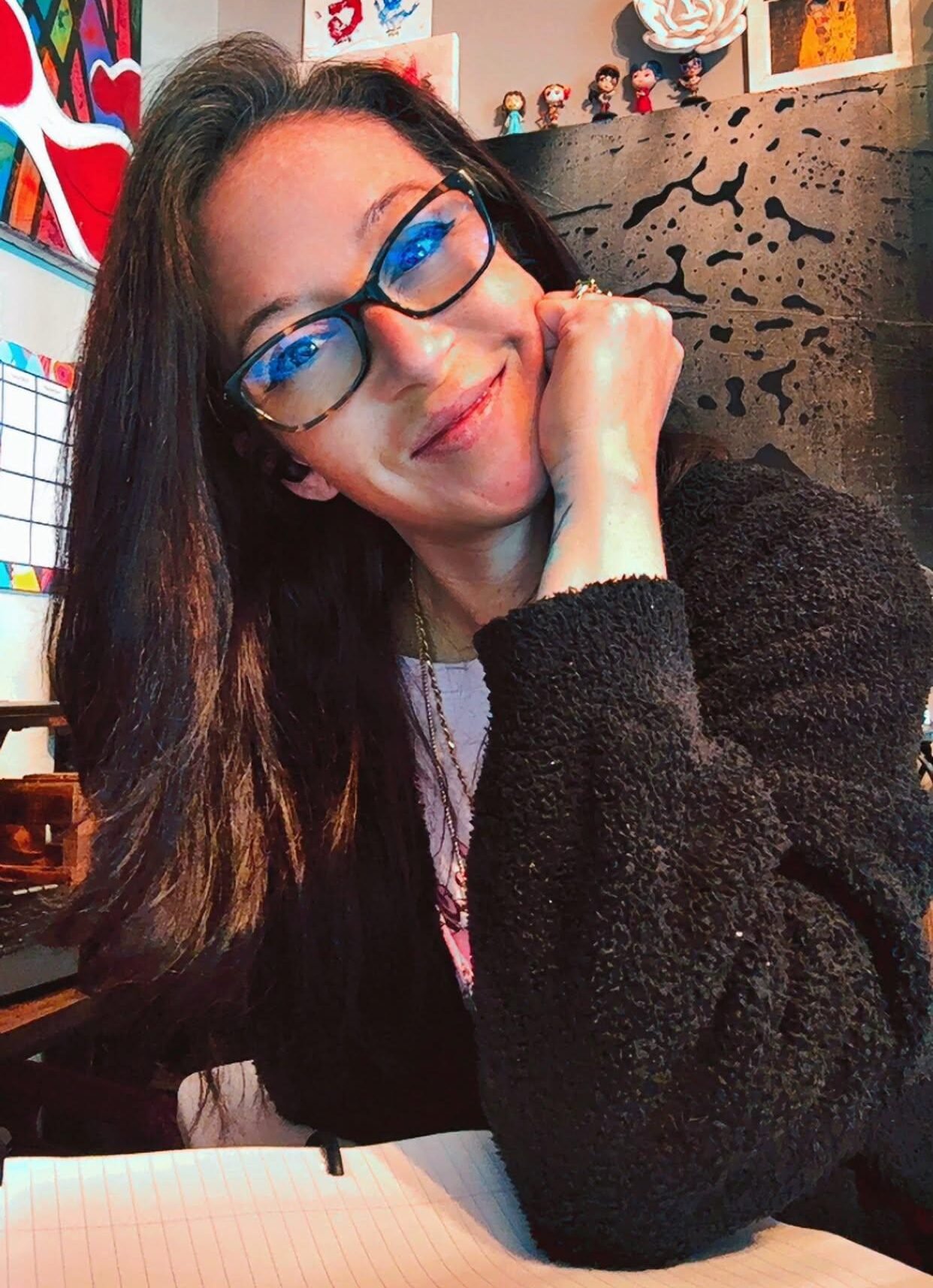
Artist Interview – Rachel Gonzalez Giambrone
When Rachel first reached out to Marea Gallery, she didn’t send a portfolio or a bio. She shared her story openly and without filter. Her childhood was defined by trauma and abandonment. A legal system punished her as a teenager for refusing to betray her peers. She spent years advocating fiercely for everyone but herself. And through all of it, she raised three children, built a daily painting practice, and found in the canvas the one place where she gets to speak entirely on her own terms.
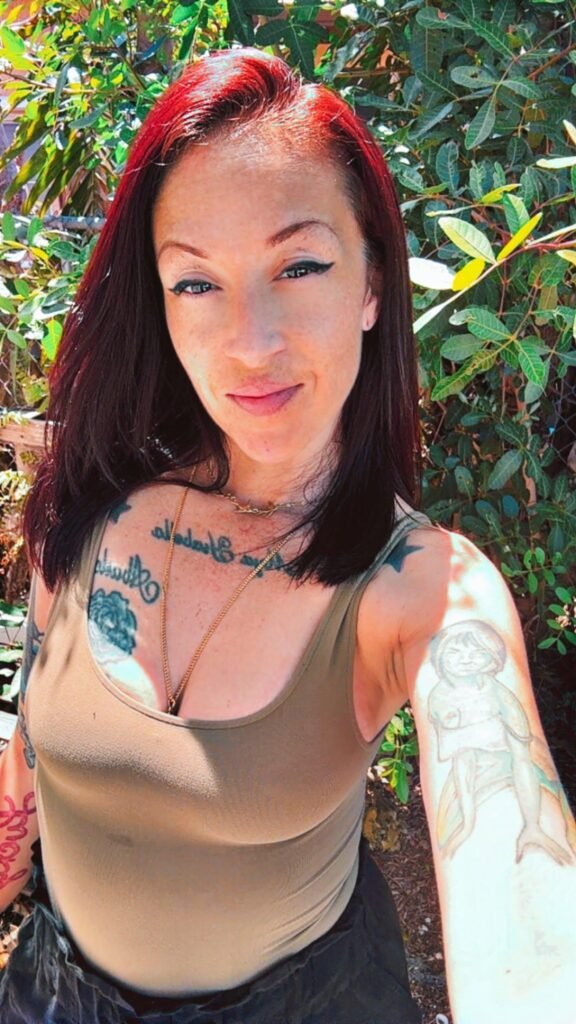
She was one of the selected artists in Marea Gallery Edition 01 – Open Waters, where her work “Forever”, spray paint and acrylic on canvas, 122×61 cm, was part of the exhibition.
She has had offers from well-known media platforms to tell her story. She turned them down because not every stage is worthy of the story being told. I am honoured that she chose Marea Gallery.
Her story will stay with you. It is a story about what happens when someone who has been used, discarded and underestimated decides at 39 that it is finally her turn.
Tamara Perusic, Curator, Marea Gallery
Who are you outside of your art and how does that person show up in your work?
My life has been defined by being forced into roles I never chose. As a child, I witnessed a violent crime committed against my mother, a trauma that left me navigating a home environment where I was treated not as a grandchild to be loved, but as a “living ledger” of my parents’ debts. My parents, who abandoned me and eventually passed away on the same date nine years apart, left me with a grandmother, my Mima, who passed in 2023, who used my existence as a weapon to guilt them.
At 16, I was living in an environment shaped by addiction and instability. I ended up connected to a situation that pulled me into the legal system, and because I refused to give names or betray people involved, I was charged as an adult. That experience taught me how quickly vulnerable teenagers can be turned into statistics.
I spent my youth being treated as a tool for others’ agendas, first as my family’s scapegoat, then as the state’s statistic.
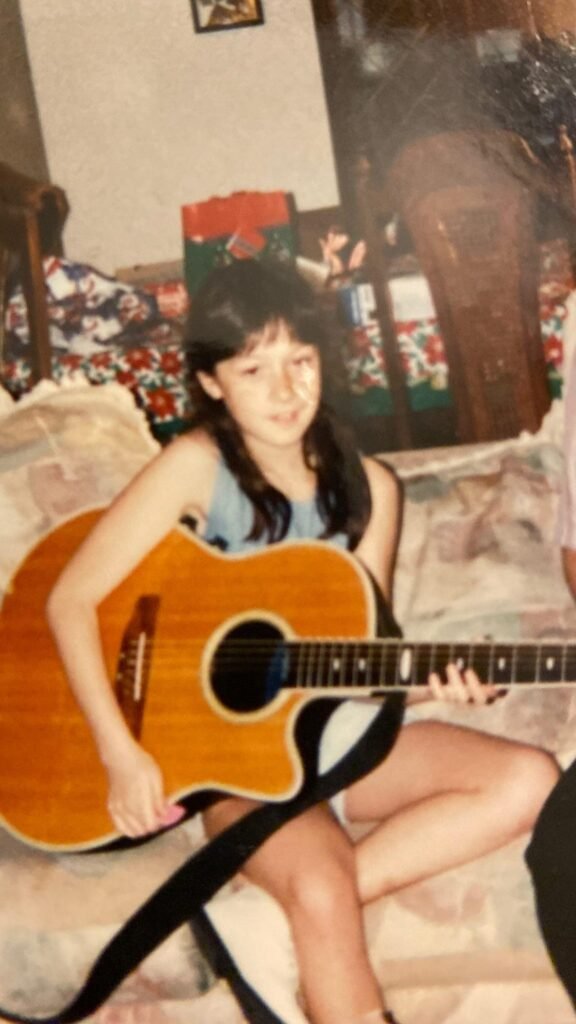
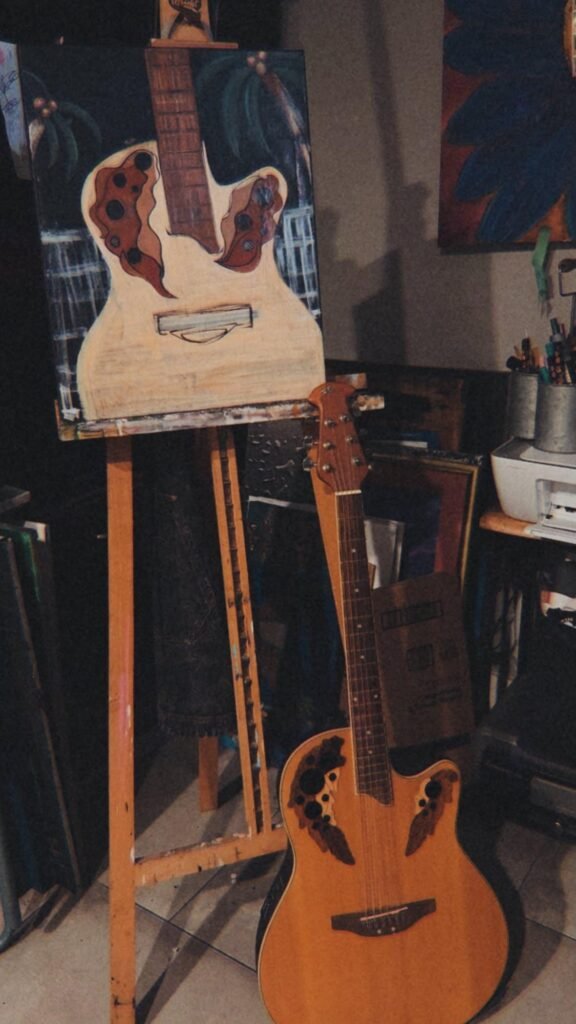
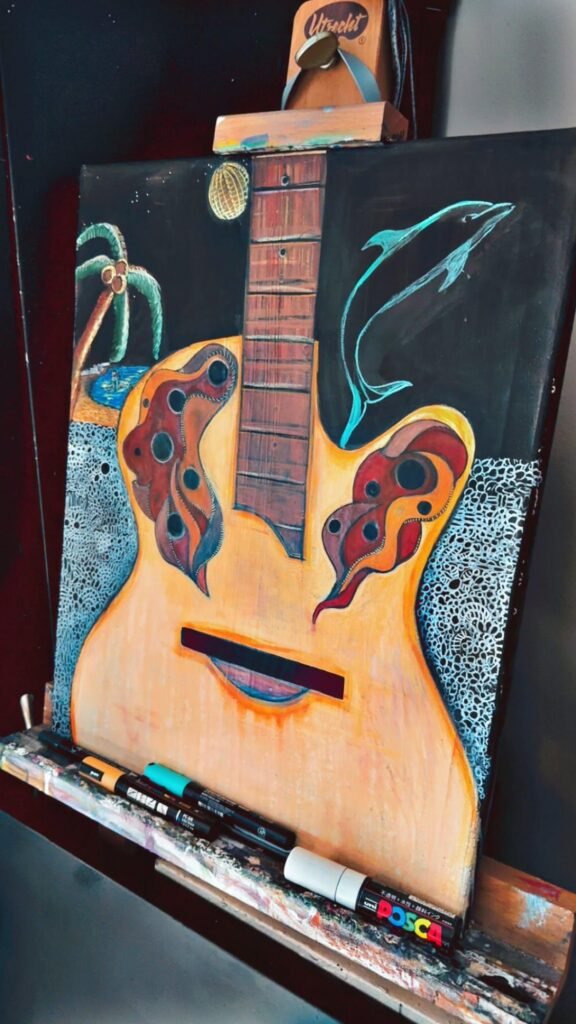
Today, I am taking back that narrative. I am using the very symbol of my father’s neglect, his old acoustic guitar, as a canvas. I am painting over it, turning a hollow object of “noise” into a testament of my own voice. That person, the one who survived all of that, shows up in every piece I make. The intensity, the refusal to be quiet, the need to transform rather than destroy. That is who I am. And that is what you see on the canvas.
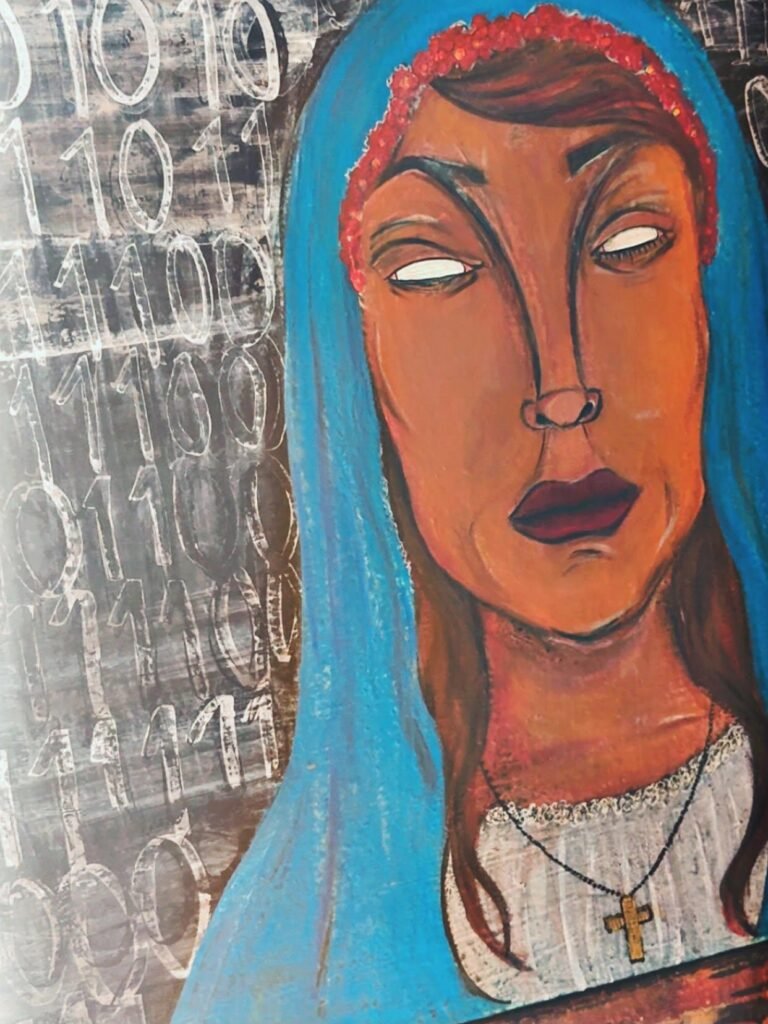
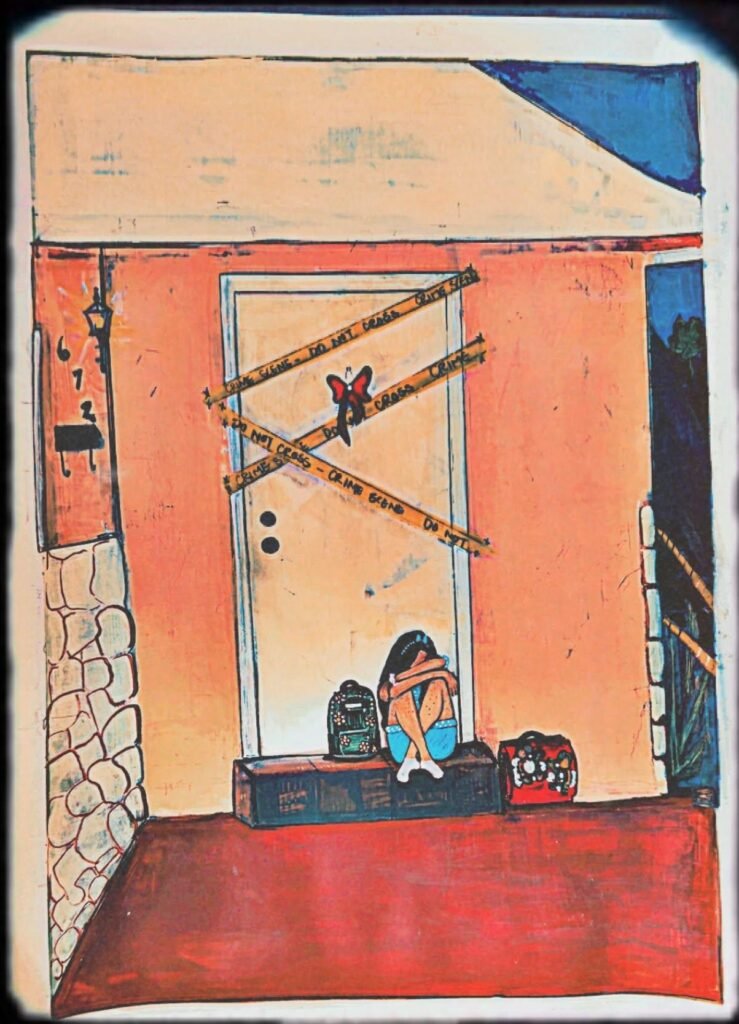
How would you describe your artistic practice to someone encountering your work for the first time?
My practice is an unfiltered exploration of mediums and consciousness. I don’t approach the canvas with a rigid plan; I approach it as a site for discovery. It’s a dialogue between the materials: acrylics, pastels, spray paint and my own internal state. I’m not just painting images; I’m mapping the terrain of the mind.
What mediums and techniques do you work with?
I work with a range of mediums, from acrylic to the unpredictability of the elements, like capturing rain directly on the canvas. I’ve found my voice in the tension between acrylics, pastels, and spray paint. I prefer the layering and speed these materials allow they keep pace with the way I think.
Walk us through your creative process; from the first idea to the finished piece.
My most successful work is born from ‘sending it’, letting the canvas dictate the direction. When I do take on commissions, the process shifts; it becomes an act of translation. I immerse myself in the collector’s story; their pain, their history, their defining moments. I internalize those details until they become a physical urge, and then my hands move to weave those symbols into the work. It’s not just painting; it’s storytelling through abstraction.
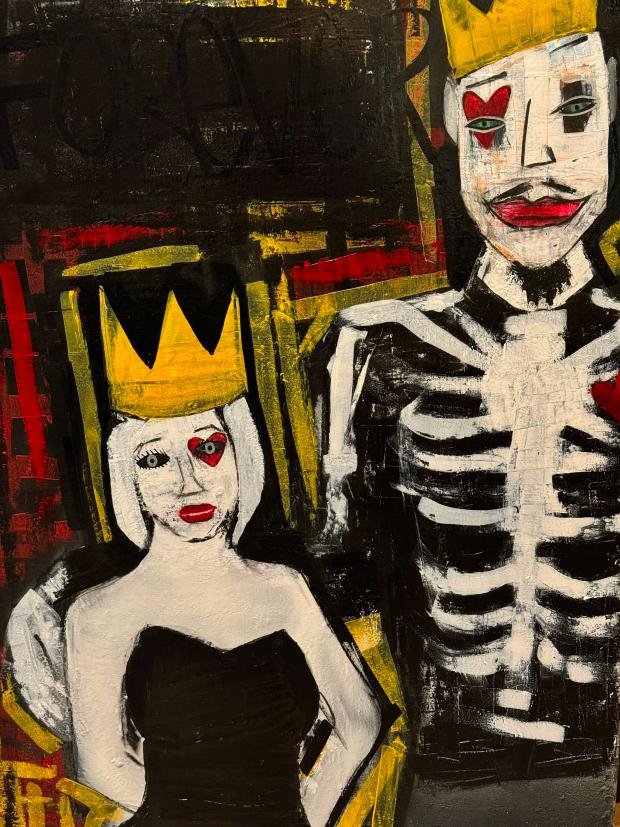
You’ve been painting every single day for four years. Where does that dedication come from?
It’s taken me 38 years, but I have to admit I’m grateful for the hardship. It forged a more resilient and open-minded version of me, and it makes for great subject matter when creating a painting. I owe it to the collectors who have purchased my work. They deserve a return on their investment, and that can only happen with dedication and daily devotion.
Tell us more about painting over your father’s guitar. What does it look like, and what does it feel like to work on it?
It is currently a work in progress. That guitar represents a broken legacy from all of the almost-made-it moments he had. For a long time, I felt the weight of that fracture. I’ve stopped trying to ‘repair’ it in the traditional sense. Instead, I’m transforming it. Painting over it is an act of reclaiming; it is a symbol of breaking the chain that the instrument once represented.
What do you hope someone feels when they stand in front of your work?
I want them to be unsettled in a way that forces them to think. My background is 19 years in high-stakes construction and real estate. I spent my career fixing the messes left by ‘evil’ corporate mismanagement and contractor failures. I’ve spent decades solving complex, broken systems. I bring that same intensity to the canvas. I want the viewer to stop looking for a ‘pretty picture’ and start questioning what is possible.
You have had opportunities to share your story with the world but chose to wait. Why?
I walked away from well-known media platforms because I didn’t feel they aligned with me and my person. I’ve kept the story to those who have engaged me genuinely. I just didn’t want to allow people with bad intentions to use me for my story. I’d rather allow someone more deserving.
Everyone says I need to write a book. One day I will; I have a vision for it. But not yet.
You are a mother of three, two of whom are on the autism spectrum. How has motherhood shaped you as an artist?
I’ve spent my career working hard. I’ve owned businesses, but I currently find myself home full time with a nonverbal little girl who needs me. So art became the activity that allows us to bond. It gave me back something I didn’t know I had lost: the ability to simply be present, without agenda, without outcome. That has changed everything about how I approach the canvas.
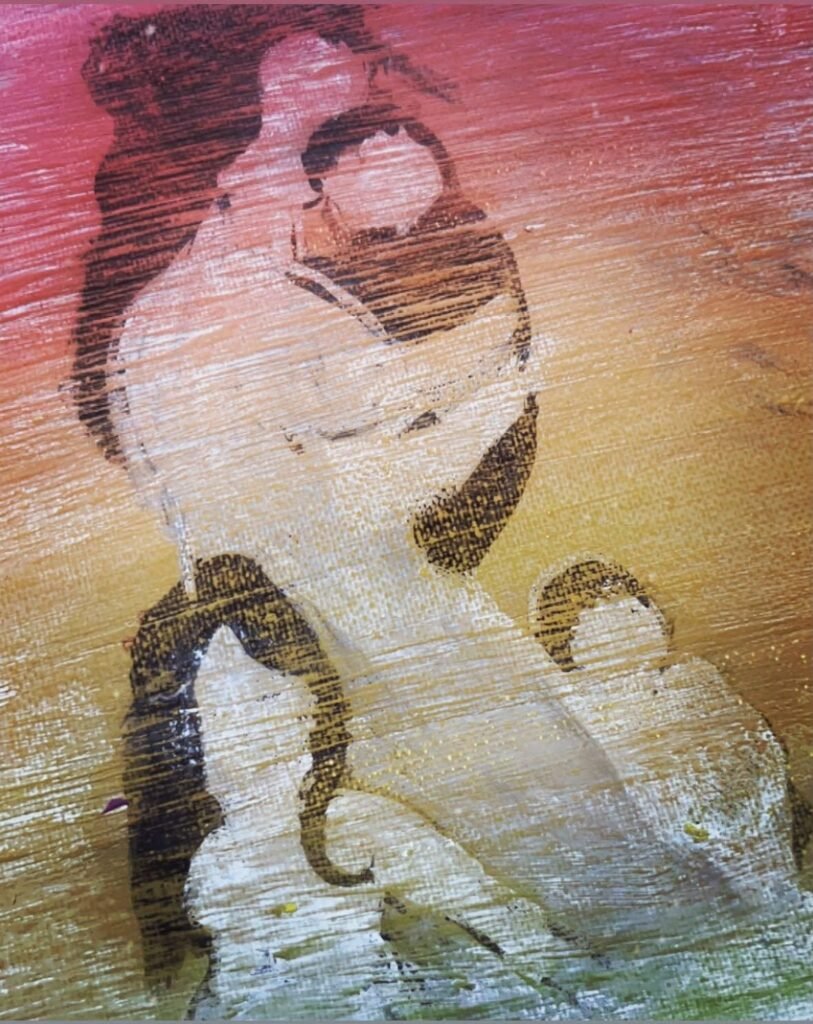
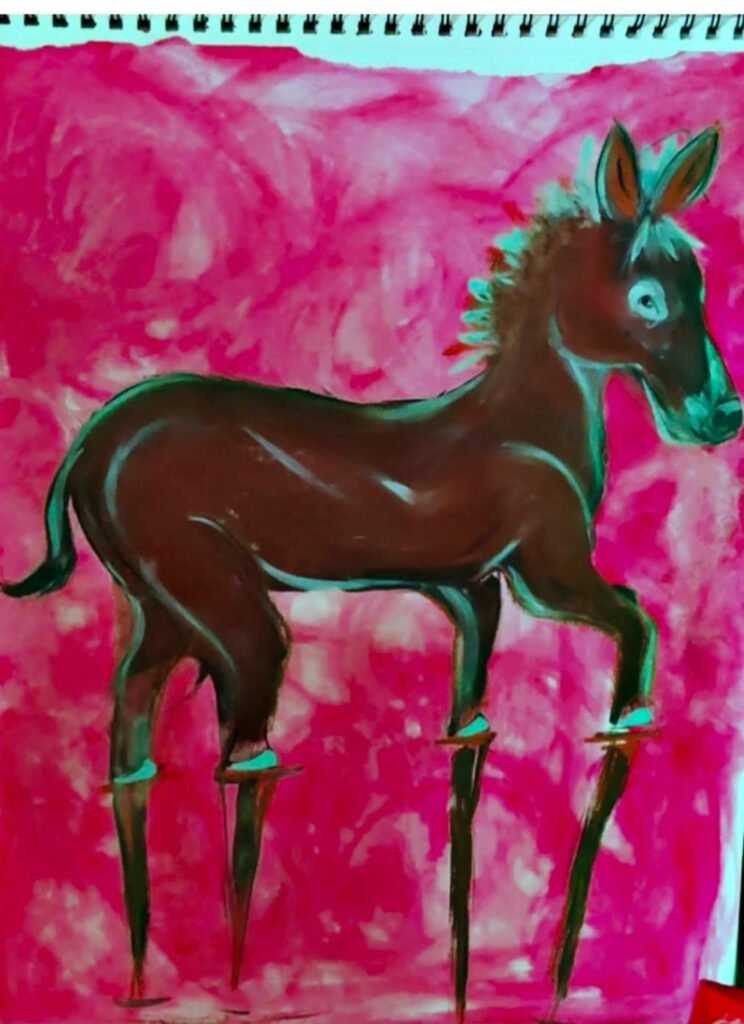
Art became a way to bond with your daughter. Can you tell us more about that?
My daughter is nonverbal and on the autism spectrum. In a world that demands words, we found a different language. Painting allows us to bypass the noise. When we sit together with colour and line, the clock stops. It’s the only space where we can truly exist in the same moment, wordlessly. It’s not just a hobby; it’s how we connect.
What are you working on right now?
I am currently painting a lion that visited me in a dream. In the vision, the lion stalked and killed me, only for me to wake up and realize that the ‘Rachel’ who once existed is dead and gone. I am emerging as an evolved version of myself: a survivor of a childhood defined by trauma, a witness to my mother’s shooting, and a person who has spent a lifetime navigating the aftermath of my parents’ addiction and their eventual passing on the same day, eight years apart.
The most important ‘project’ I have ever managed is the rebuilding of me. I’ve spent my career aggressively advocating for others, selling the talents of others, and fixing complex systems, but I’ve yet to do the same for myself. I have spent my life converting a ‘street mentality’ into a means to aggressively advocate for my clients, and now I am turning that advocacy inward.
As I turn 39, I am shifting my priorities. I am done empowering everyone else’s dreams at the expense of my own. I am building a future that integrates my expertise in complex systems with the raw honesty of my art. I am no longer just surviving; I am building a fortress for my children, ensuring that their future is defined by my strength, not my history.
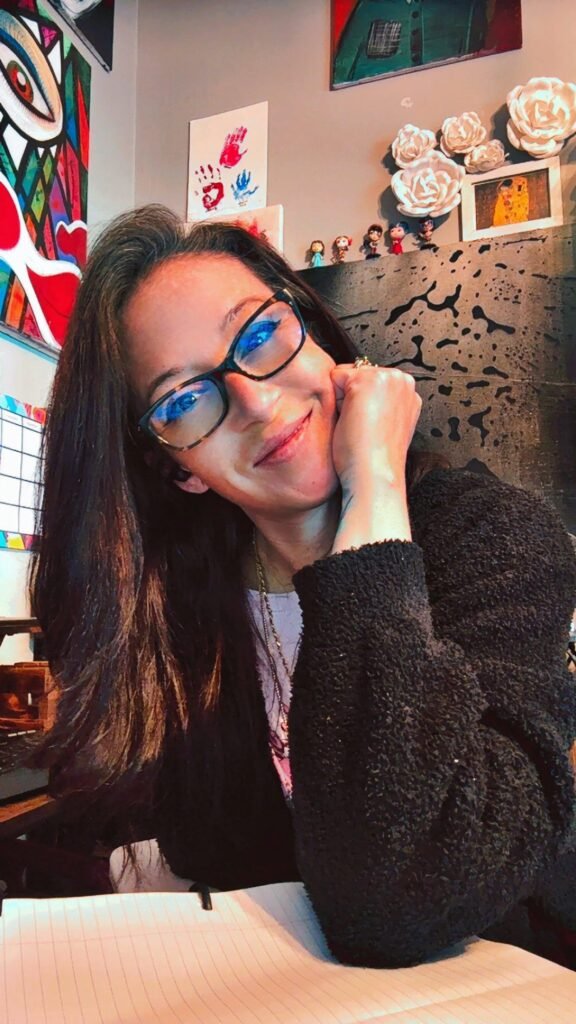
Follow R.G.G on Instagram: @artbyrgg