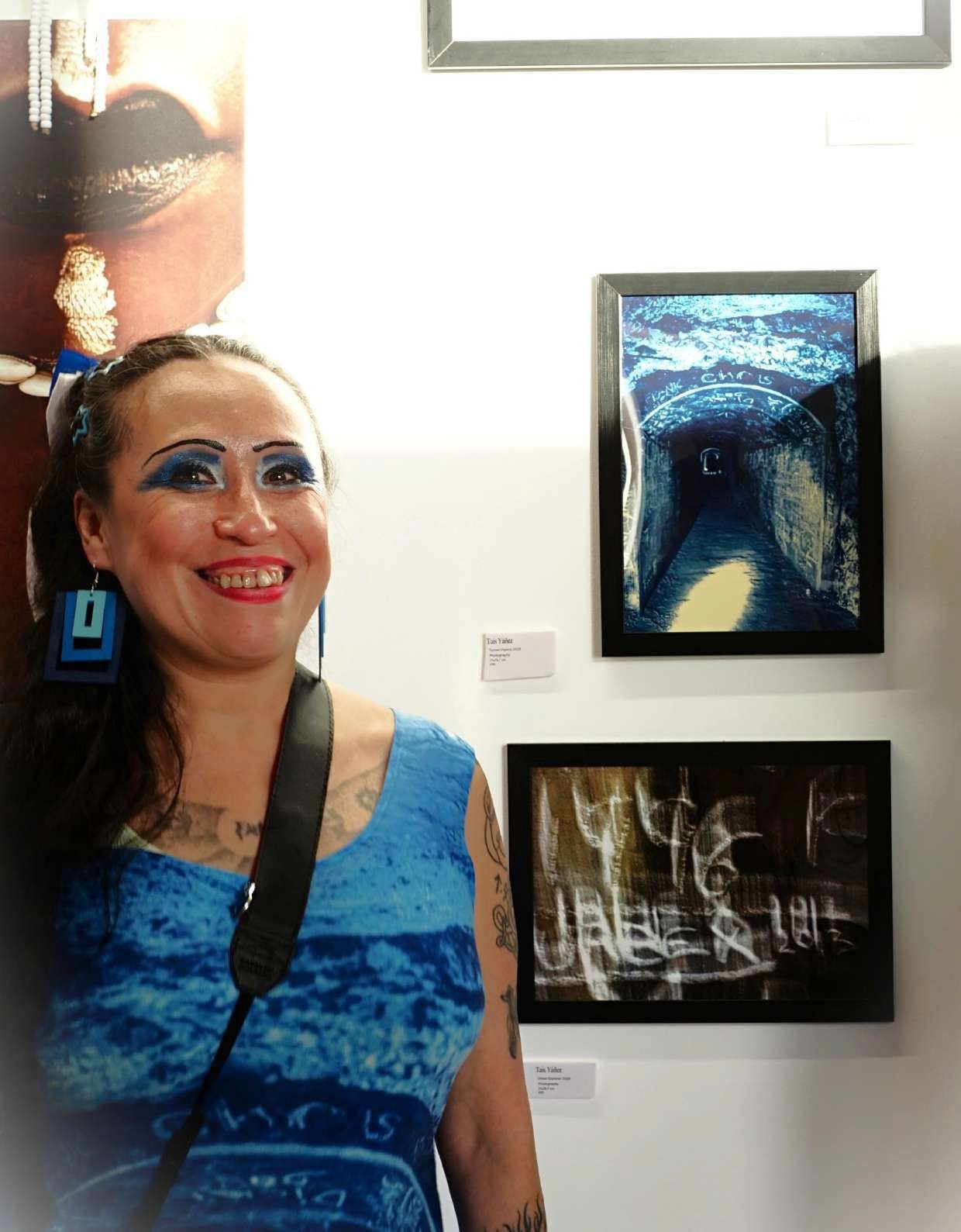
Artist Interview – Tais Yáñez
Tais Yáñez did not arrive at photography through art school or a formal creative path. She arrived carrying an entire life, migration across seven countries, neurodivergence in a world that had no language for it, an Indigenous Mexican identity navigating Eurocentric spaces, and decades of creativity pushed quietly to the background.
When she picked up a second-hand camera, something shifted. Photography gave her a language for what academic and political language alone could not reach. It gave her a reason to leave the house on difficult days, a way to move through London on her own terms, and a space where the intensity of her perception, so often treated as too much, became her greatest asset.
Her work does not reproduce the world as it is. It reveals what is underneath: histories, emotions and possibilities that exist beyond what is immediately visible. To encounter her photographs is to encounter a perspective one that has been shaped by everything the world tried to erase.
Tamara Perusic, Curator, Marea Gallery
Tell us a little about yourself – who are you, and how did you find your way to art?
I’m Tais Yáñez, a Mexican-born, London-based photographer, researcher and activist. I’m Indigenous, queer, neurodivergent and working-class, which more than labels are mirrors, tools and experiences that shape how I understand the world, and how it translates to my art.
Creativity has always been part of my life, although for many years I did not believe I had the right to call myself an artist. I think there’s an idea that an artist is somebody who has attended an expensive art school or makes a good living off it.
As a child, I was the to-go person when they wanted a drawing. I studied theatre at a community centre and appeared in a couple of plays. At fifteen, I became involved in a student movement that used guerrilla-art tactics to amplify the message. I later joined a small street-theatre group that performed in deprived areas of Mexico City and, for a time, ran workshops with homeless children.
In the 1990s I was also part of Mexico City’s goth scene. At that time it was an intensely creative environment involving music, poetry, DIY fashion and performance. I helped create its first fanzine and wrote, directed and acted in performances during club nights, a night out could include a DIY fashion show, a performance and live music.
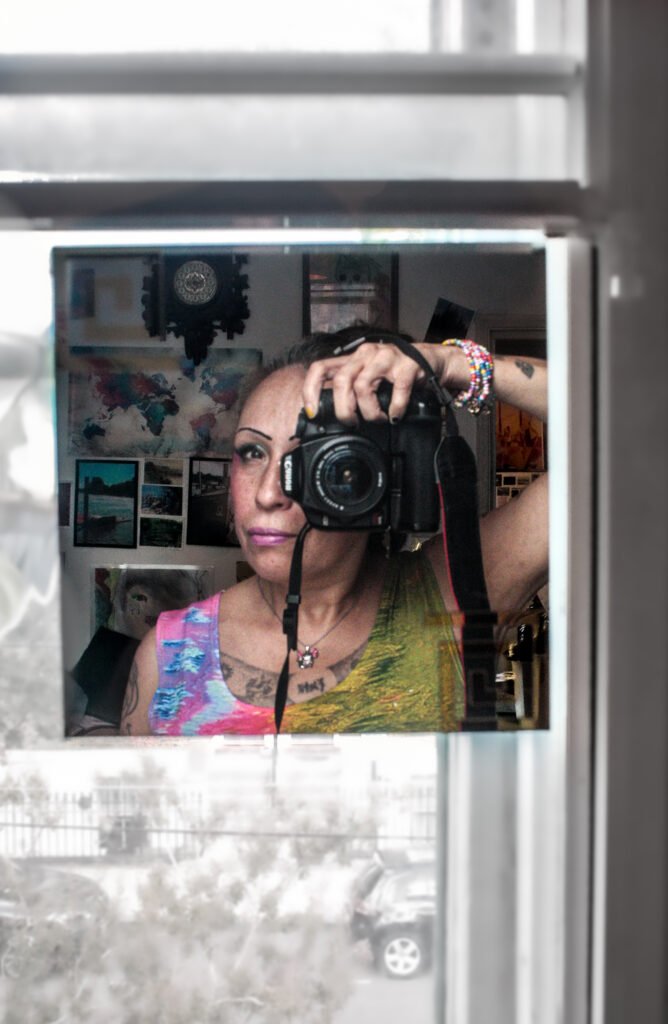
After migrating to Europe in 1998, that part of my life gradually was pushed to the background due to the difficulties of surviving as a migrant in 7 countries. My creativity continued privately through clothing, poetry, writing and drawing, but performing was not the style here. I also went into the academic sector and did many other things. My confidence went downhill, too. But then I bought a second-hand Canon Rebel XS, and it improved my life massively. Photography gave me a language for expressing things that academic or political language alone could not.
Was there a moment in your life when you realised art was not just something you did, but something you needed?
It was less a single dramatic moment than a gradual realisation. After moving into my flat in 2015, I began decorating it in what has been described as an ‘OTT’ way. It is my home, gallery and sensory refuge, a place where I could finally let my creativity move on and beyond.
The real epiphany came when photography began giving me a reason to leave the safety of home, particularly when my mental health and sensory overwhelm made going outside difficult. My frequent long walks and train journeys became a creative ritual. Taking photographs helped me move through London on my own terms and transform anxiety, isolation and sensory intensity into something meaningful.
Eventually, I realised that I was not simply snapshooting but I was processing experience, recovering curiosity and reconnecting with the world. My sense of self has improved enormously since beginning this journey because creating is when I feel most fully myself. It has helped me process my trauma and mental health issues in a healthy way and reframe my difference in perception of the world from pathology to an asset.
Art heals. No, it is not a cure, and my mental health challenges are real, but for me, creativity and recovery go hand in hand. Focusing on making art helps me breathe, think and feel connected to myself and to something larger than myself. Creativity is also freedom in its purest form, I think. In a system of restrictions, borders, rules, art itself is the last bastion.
You say you were named after music. Can you tell us that story?
I was named after Thaïs, the opera by Jules Massenet. My father loved music. He says he wanted a name that reflected that I’d be, in his own words, “extraordinary, different from everyone else.” He read about the opera, listened to the music and chose Tais – without the ‘h’ and ‘ï’.
Interestingly, my other name, Verónica, was also inspired by music: a popular ballad from the early 1970s. I love following research rabbit holes, and I later saw that Verónica comes from Latin vera icon, or “true image.” I’m quite see-through, wear everything on my sleeve, and as a photographer, that feels particularly meaningful, too.
People say that childhood is destiny. I don’t know whether that is always true, but I like to understand my names as a happy sign that creativity, emotion and atmosphere came with the package.
The story also says something about class and access to art. We were working-class, and my father was unable to finish school, yet he is one of the most educated people I know – a historian without a degree, as I always describe him. He named me after an opera, an art form commonly associated with privilege, while we were working-class in a cornfield in Mexico. To me, that was neither pretension nor social aspiration. It demonstrates how art should be: available to everyone.
Music became important to me when I joined a choir as a teenager. I was being bullied at school, and singing gave me somewhere I could feel better and belong. Music still influences how I create. I think about photographs through rhythm, mood, repetition and emotional intensity.
You photograph what you feel, not what you see. What does that actually look like in practice – how do you know when you’ve captured the feeling?
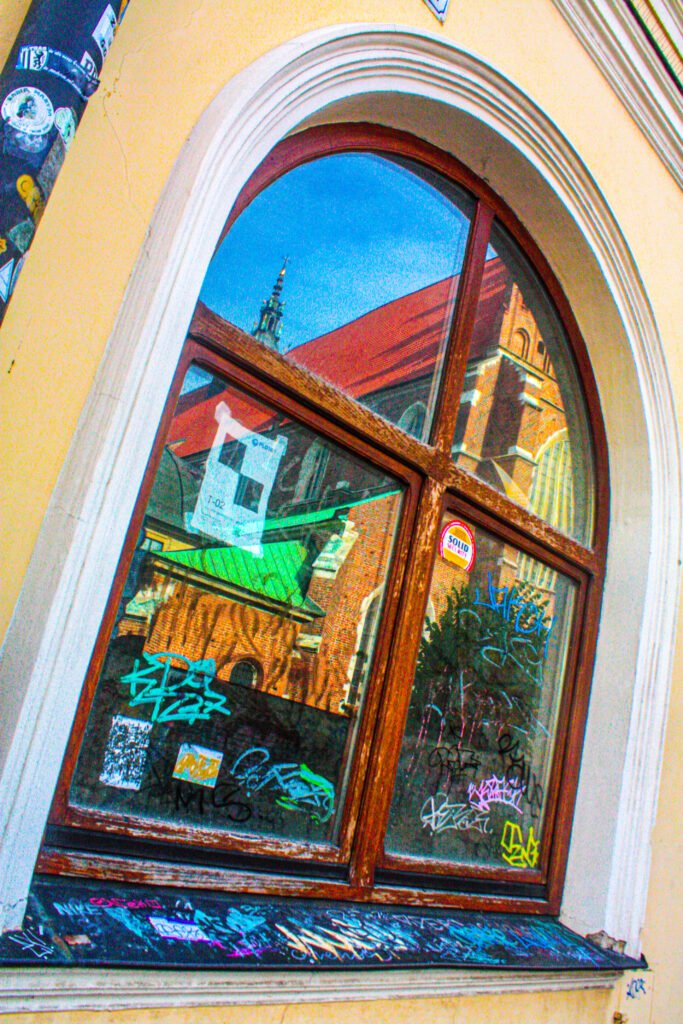
The physical reality in front of me is only the beginning. There’s more underneath all that. The camera records it, but I treat that reality as a canvas. I am interested in fun, tension, colours, movement, history and possibilities, and in how I experience all of those things.
I am not trying to reproduce the scene exactly as everybody else might have seen it. I want to embellish the world with a bit of magic, layers, like magic realism or surrealism does – how ordinary places have extraordinary hidden dimensions for us to see if we know how to look.
Editing is a continuation of that encounter, and it does not always follow a conscious logic. My brain, emotions and hands seem to move together. I work instinctively with colour, grain, texture, light and contrast until the image comes closer to what I feel or, as a Mexican abuelita might say, until my ancestors tell me, “That’s enough now, darling!”
I sometimes joke that I become possessed while editing. I might suddenly feel that an image needs to be completely maximalist, to honour the vibrant ancestrality of my Indigenous and Mexican cultures, to carry the atmosphere of the 1970s and 1980s, or to evoke worldwide art and cinema movements meaninful to me and the world esthetically and historically.
I know I have captured the feeling when the photograph stops being merely descriptive when I can see a story, recognise myself within it and sense something deeper than the factual reality of the place. That, to me, is part of the magic of art. It reminds me of what Werner Herzog calls “ecstatic truth”: the idea that art can reveal something deeper than factual reality if embellished with imagination, intensity and sometimes exaggeration.
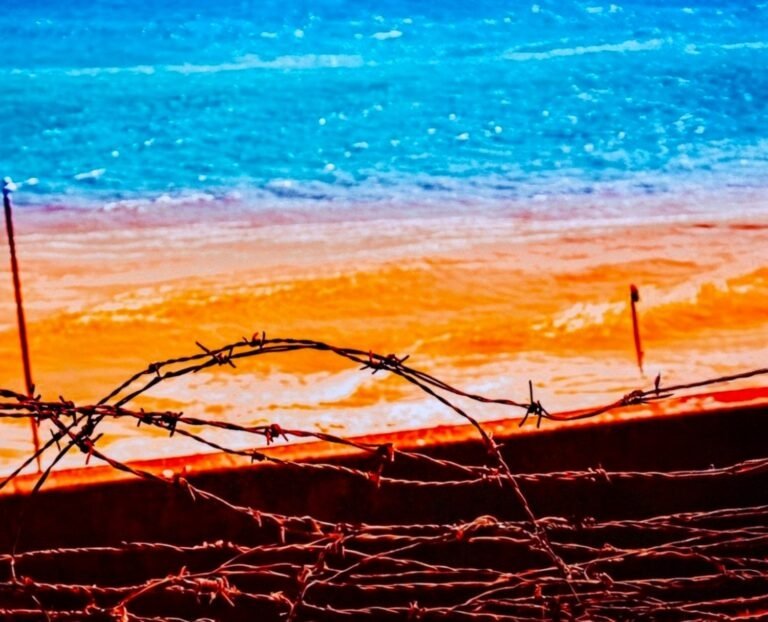
Your visual language is shaped by saturated colour, grain, texture and movement. Are these conscious choices or do they arrive on their own?
My style has evolved a lot as I am learning by doing. I’d say it is a mixture of how my brain operates, my Mexican and Indigenous identity, the journey of migration, and the gorgeous pluricultural kaleidoscope of influences I have gathered over the decades. It is literally my brain and heart resisting erasure. You can see it also in my home décor, the way I dress and my make-up.
I describe it as an organic form of maximal resistance: resistance to colonial and classist standards of beauty and taste, and to the expectation that serious art must be restrained, clean, technically perfect, minimal. It also challenges the idea of a “universal” art that presents West-Eurocentric aesthetic as uniquely tasteful, superior or aspirational.
My visual language is complex, but it is honest. My images can contain many emotions, stories and meanings at once because that is how I experience life. I am naturally drawn to intense colour, large patterns, layered surfaces, reflections, movement and visual complexity. Often, I do not realise how intense I may appear to others until somebody tells me. Choosing to keep creating that way is when instinct becomes intent.
I choose to continue despite repeatedly hearing that my photography, make-up or walls are too much, too intense, too full, too overwhelming, too pixelated or too hazy. Rather than treating those qualities as defects, I embrace them as part of my visual identity.
Where do you find yourself when you’re working? What kind of state do you need to be in to create?
My moods and energy levels fluctuate considerably, so I cannot say there is one perfect state in which I create. In fact, I often go out specifically to take photographs because I know the process may improve how I feel. Creating helps me move through unhelpful thoughts and feelings.
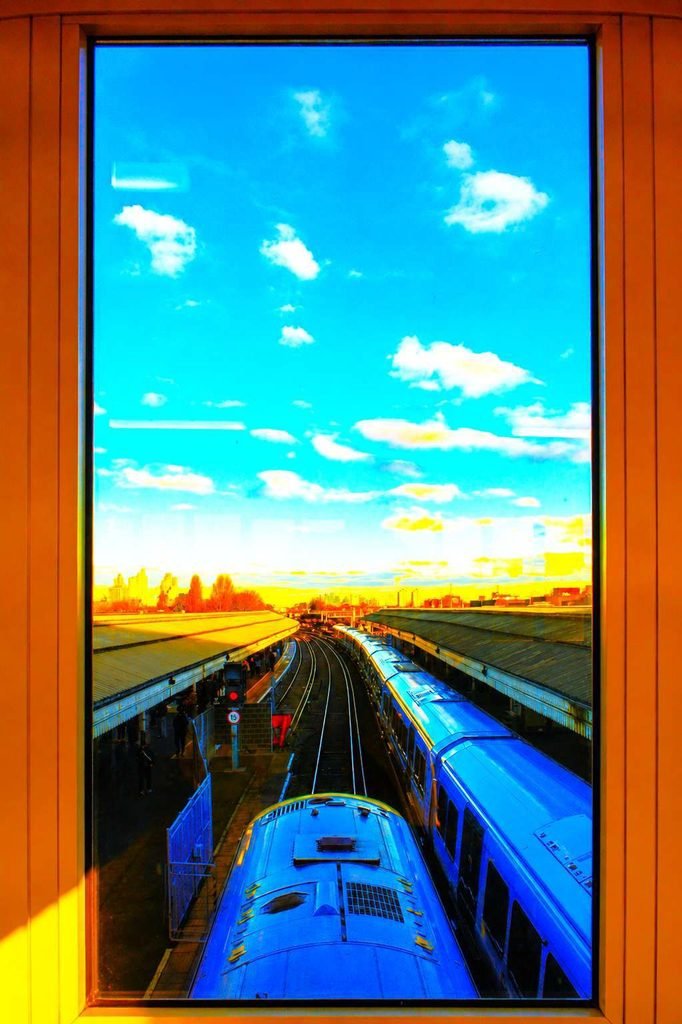
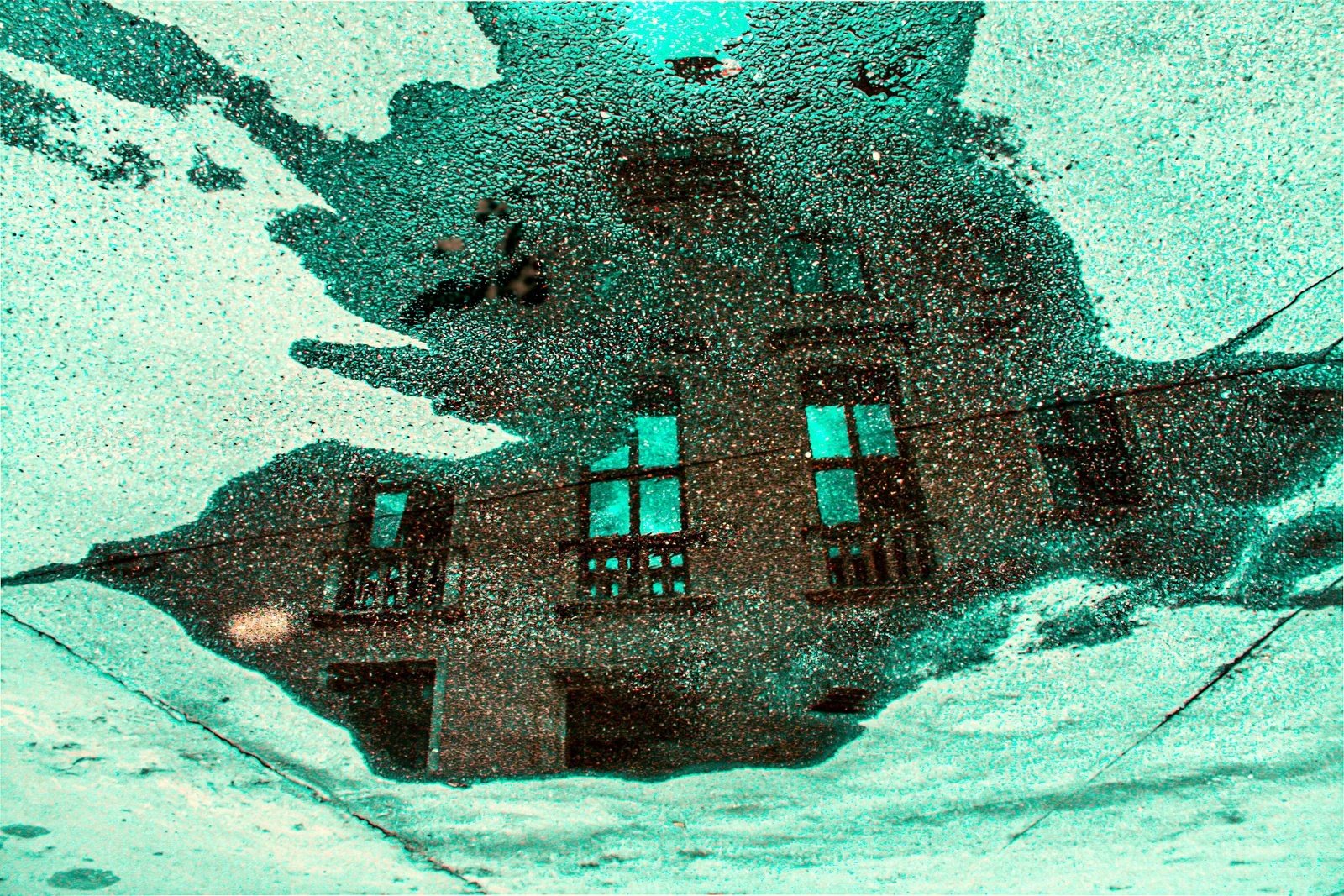
I usually work while in transit: on trains, at stations or walking for hours. Movement helps me notice things differently. I become absorbed in reflections, fragments of architecture and landscapes passing through a window. The camera also feels protective: it creates a kind of shield between me and the parts of the surrounding environment that might otherwise overwhelm me.
I do not need to feel completely calm, confident or inspired before I begin. Sometimes I set myself a particular project, such as exploring a Tube line or a historic site. Occasionally, the project takes me much further, like Ramsgate old railway and WWII bunkers, or even Kraków.
Editing requires a different environment. I sometimes work in cafés, but I usually work at home, where I can control my surroundings. The journey gives me movement and material; home gives me the space to transform it.
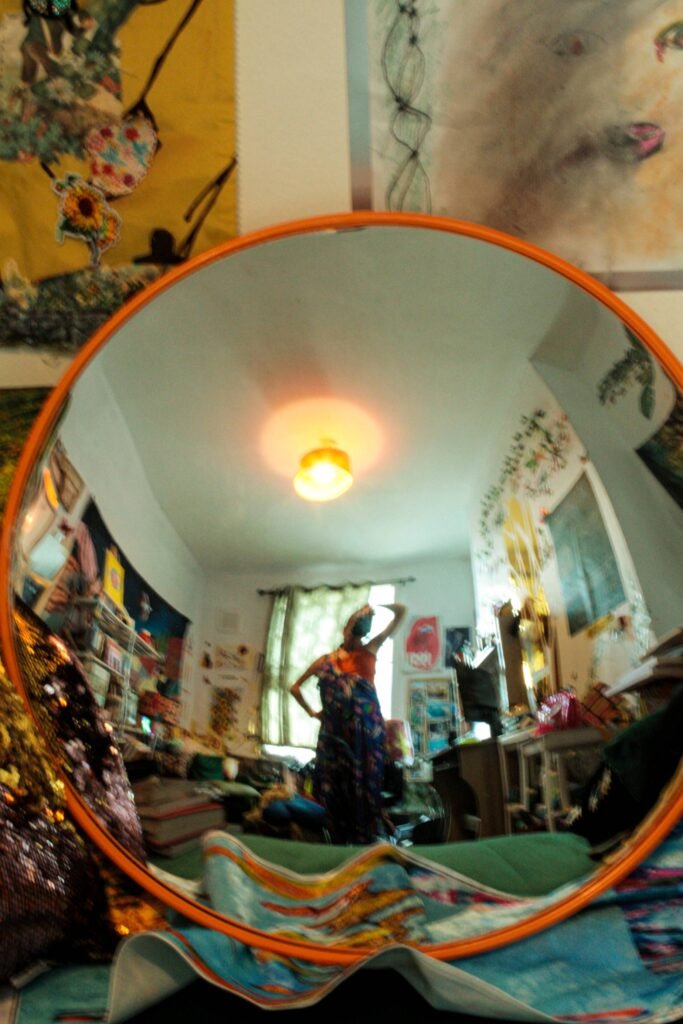
How does your neurodivergent sensory experience shape the way you see and create?
Neurodivergence shapes everything. I was born neurodivergent in 1974, long before the medical field had a word for my experience. Before my diagnoses of ADHD, autism and dyspraxia, I ‘collected’ mental health labels. Some described my difficulties, but none gave me the fuller understanding of how my brain works that I have now.
Neurodivergence shapes what I notice, what I care about and how intensely I experience things. I am drawn to colour, texture, pattern, repetition, movement, finding shapes and small details others may overlook. I also enjoy highlighting what somebody else might crop out of a photograph.
My oversensitivity can be overwhelming or very misunderstood, but photography gives me something like a magic wand. From taking the photograph to the post-production, I can let it all out, experiment, create a vision rather than simply reproduce what was physically there. My images may have beauty and discomfort, excitement and anxiety, freedom and confinement at once. I do not need to resolve those feelings. Their coexistence is central to my vision.
Photography has helped me understand my perception as a way of processing the world, rather than a lack of capacity or pathology. I often joke that it is the best hyperfixation I have ever had. More than that, it feels as though I have found my calling.
Whose stories do you feel most drawn to tell through your photography?
I am drawn to histories and places that exist outside dominant ways of seeing: neglected urban spaces, places that hold migrant experiences, working-class and revolutionary histories and environments dismissed as ugly, dangerous or unimportant.
I try not to claim that I can tell somebody else’s story for them. I photograph from my own identity intersections, still struggling with the sense of belonging and invisibility. I connect to a station, an abandoned structure, a barrier, a tunnel or something briefly glimpsed through a window – memories of labour, displacement, exclusion, violence and survival.
My Indigenous background, solidarity activism, heritage work, travelling and meeting people from all over the world influence me and my interest in cultural resistance and survivance. Communities that have endured conflict, genocide, and colonisation continue to create, remember and sustain our cultures. That cultural power declares that erasure has failed, that erased histories and places are meaningful, beautiful and inspiring.
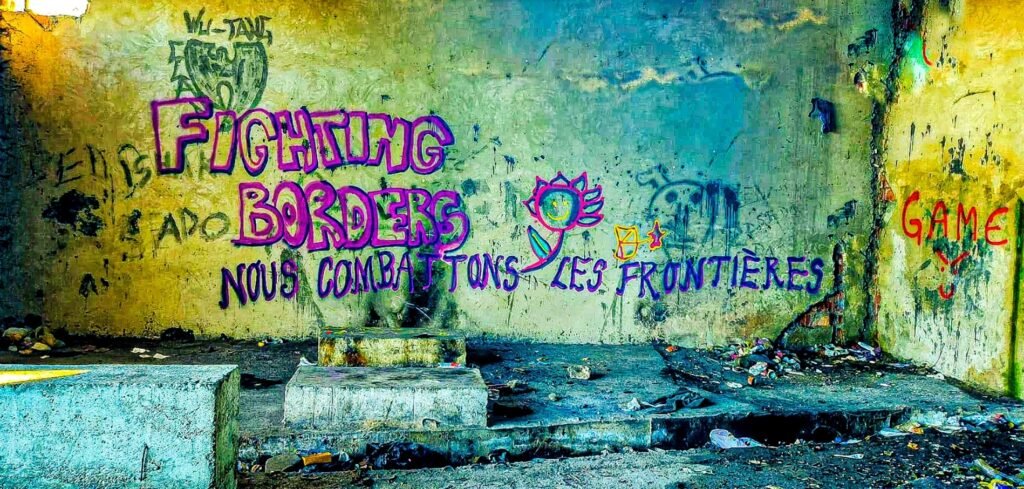
Which of your works feels most significant to you, and what is the story behind it?
I do not have one favourite photograph, but the work that perhaps defines me most at this moment is everything I have created around trains, particularly my ongoing Joy-photoride project.
Once a week or so, I travel somewhere by train and photograph the journey: trains, carriages, stations, architecture and landscapes seen through moving windows. The destination is often secondary; the journey itself is the mission. Trains take us somewhere, they embody movement, distance, migration, progress but also forced displacement, exploitation, separation and loss. As somebody who has built a life migrating and also studied history, I naturally connect with that symbolism.
What do you hope someone feels when they stand in front of your work?
I hope people actually observe and feel something before scrolling down or moving along. Conversations about photography can quickly become dominated by technique and method, but overanalysing art can sometimes flatten its emotion and meaning.
Trains, bodies of water, and neglected sites of historical importance are not simply subjects I happen to be fixated on. They carry histories, emotions and personal connections that extend far beyond what is immediately visible. I hope people sense that depth, that they see not only the subject, but movement, memory, resistance and possibility held within it.
I do not want to prescribe one correct response. Someone might feel joy, unease, curiosity, recognition or sensory intensity. I would like to encourage the viewer to engage.
I also hope people sense that beauty, difference, imperfection and difficulty coexist creatively. A landscape can carry both freedom and confinement; a city can be alienating yet full of possibility; intense colour can communicate joy as well as warning. Most of all, I want someone to encounter a perspective rather than a display of technical credentials, and to feel that there are many ways to see, feel and make art beyond the canon.
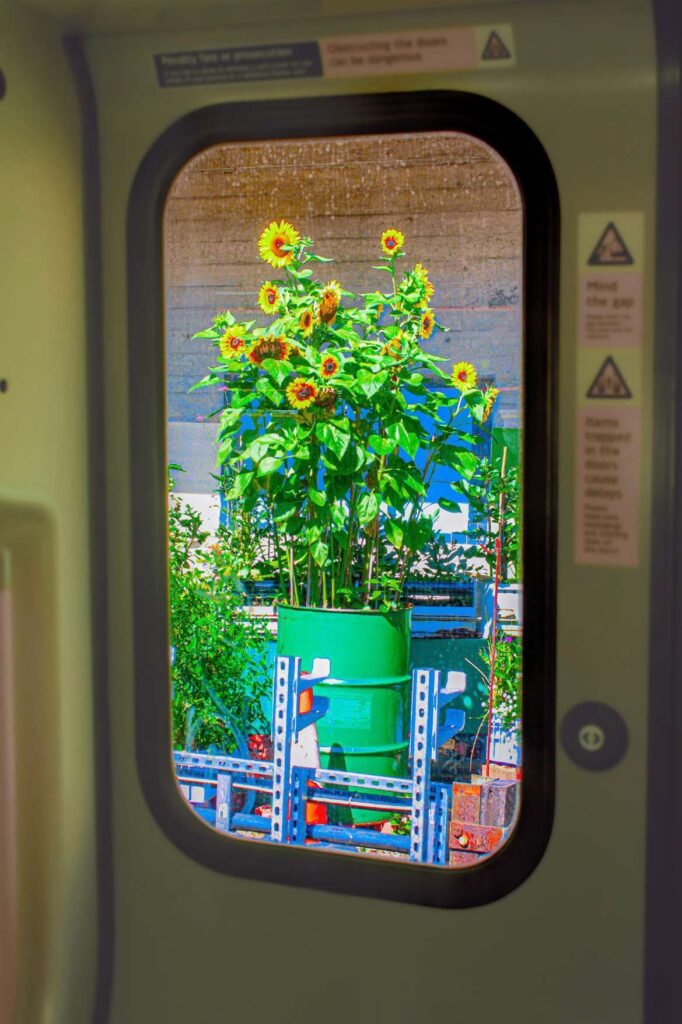
What does it mean to you to colour outside the lines – not just in art, but in life?
Colouring outside the lines means questioning who drew those lines, who benefits from them and why we are expected to remain inside them. As an Indigenous, working-class migrant, queer and neurodivergent person, I have always found it difficult to fit within a society that was not built to accommodate any of those identities, let alone their intersections.
I have always encountered expectations about how I should behave, communicate, learn, belong and create. Colouring outside the lines means refusing to reduce myself to something more convenient or acceptable in order to succeed. Artistically, it means refusing to treat my intensity, imperfection and complexity as failures simply because they fall outside approved aesthetics. In life, it means making room for different ways of knowing, learning and being.
It is not rebellion simply for its own sake. It is about creating change and finding my own ways to thrive. The gates of privilege in the art world, academia and society were never designed for people like me. I am learning, painfully, that not fitting within them is not a failure, but part of my strength.
I am different, just as my father, perhaps prophetically, said I would be when he named me Tais. Colouring outside the lines is what I have always had to do. I am now realising it is a gift.
What has being an artist taught you about yourself that nothing else could?
It has taught me to trust the way I see, perceive, and connect with the world. It’s taught me that I am not fundamentally wrong.
For much of my life, I learned to question my perceptions because they did not always fit academic and artistic parameters. Photography showed me that what I notice, and how I interpret it, has meaning.
Being an artist has also taught me that I do not have to separate the different parts of myself. My Indigenous identity, migration history, working-class background, activism, neurodivergence and interest in heritage can all exist within the same practice. My complexity is not a weakness or something to hide, it is the substance of my work.
Perhaps most importantly, art has taught me that beginning photography later in life does not make my work less serious or authentic. I arrived carrying an entire life with me.
I often say that I am where I am and do what I do both despite and because of everything I have experienced. I have lived, travelled, migrated, learned, worked and studied, formally and informally. These experiences are not obstacles I had to overcome before I could become an artist; they are part of what enables me to create the work I do.
I have always fought to change the world. Photography has shown me that I can change it a little by transforming how something is seen and what is considered worthy of attention. It may be a small change, but it is mine: my way, through my eyes and through my art.
What are you working on or exploring right now?
I want to keep my photography practice going, and continue exploring inspiration, places and histories with the same sense of joy. I regularly submit different bodies of work to galleries and art hubs, while also building my website from scratch and developing a photobook. I am also exploring curatorial practice and avenues to develop my skills as a curator, hoping to find ways of collaborating with other artists within and outside the art system.
Tais Yáñez at Marea Gallery
Edition 01 – Open Waters: Where Hope Meets Wire
Edition 02 – Traces: Leave Traces Not People Behind
Edition 03 – The Long Exhale: Transmutation
Follow Tais Yáñez on Instagram: @taimscapevisions