
Artist Interview – Tamara Perusic
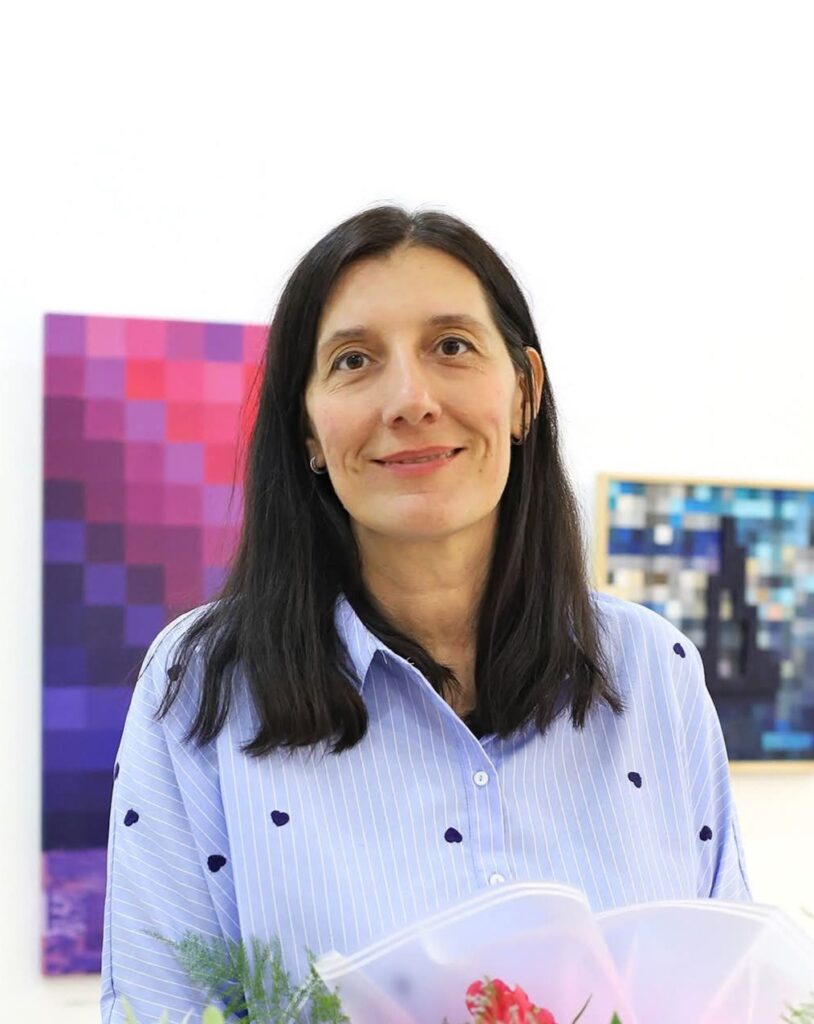
Tamara Perusic is a Croatian painter whose work carries an unmistakable warmth, vibrant, pixel-textured canvases that speak of joy, nature, and the kind of presence we often forget to practise. A graduate of both fine arts and computer science, she has found her signature at the intersection of two worlds most people would never think to connect. She is also the founder and curator of Marea Gallery.
Who are you outside of your art and how does that person show up in your work?
I am someone who finds joy in the smallest things; in singing, dancing, laughing, in the kind of happiness that children carry so naturally and adults sometimes forget. That person shows up in every canvas I touch. My work isn’t separate from who I am; it is who I am. The warmth, the colour, the energy, it all comes from the same place.
Was there a specific work, yours or someone else’s, that changed how you saw what art could be?
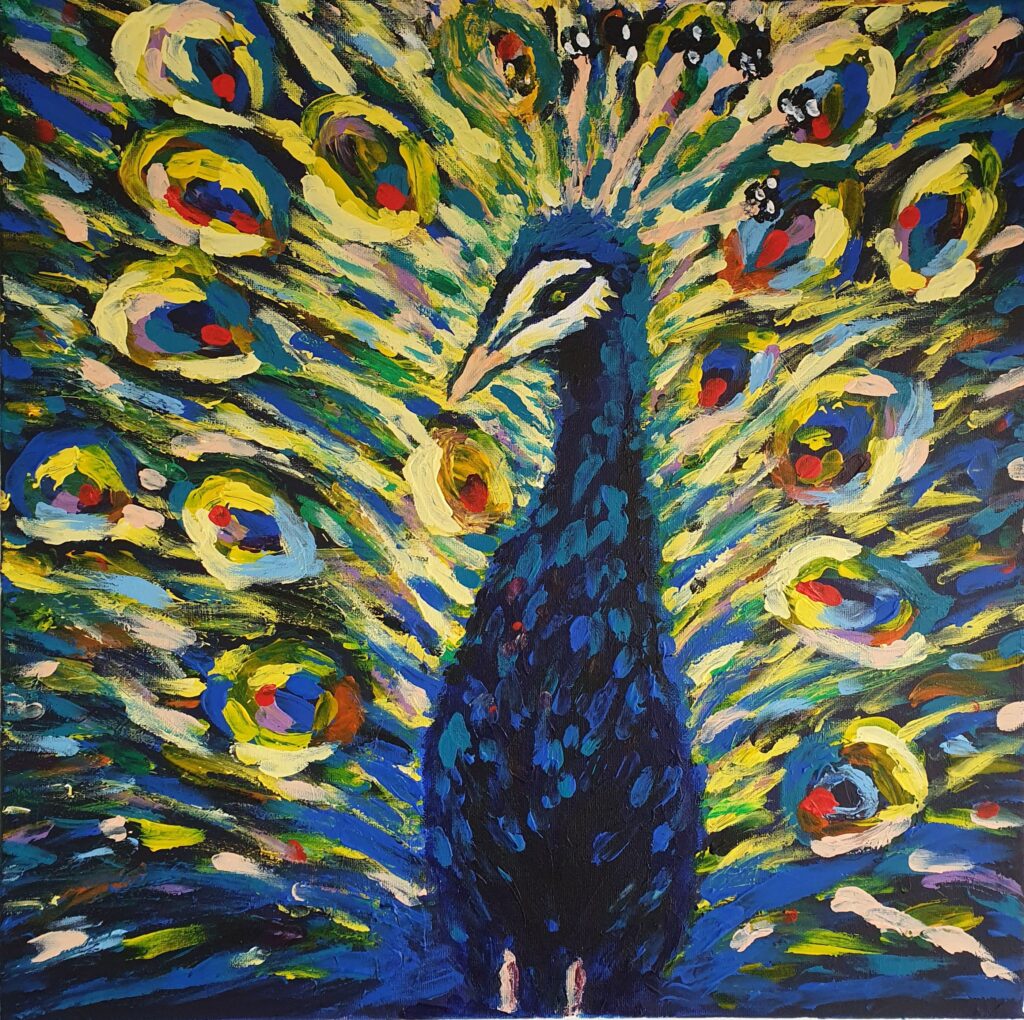
Van Gogh changed everything for me. Not just one painting, the whole body of work, the urgency in every brushstroke, the way emotion becomes texture. You can feel him in the paint. I see traces of that in my own work, in my pieces like “Vibrant Forest”, “Girl with Umbrella”, or “Peacock”, where the stroke itself carries the feeling, not just the image.
If you had to describe your work in three words, what would they be, and why those three?
Emotion, colour, memory. Emotion, because nothing I paint is neutral, and every piece starts from a feeling, not a plan. Colour because it is my primary language, the way I communicate what words can’t reach. And memory because my paintings are fragments of moments, of places and feelings I want to hold onto, a childhood joy, a quiet afternoon, a creature that stopped me in my tracks. Together, they are what I paint and why I paint.
How do you know when a work is finished?
When I feel the painting has told its complete story. It’s not about technical perfection; it’s more about a sense of wholeness. There’s a moment when I step back, and something in me settles. The painting doesn’t need anything more. That feeling is the only signal I trust.
What does your studio or workspace look like, and how does your environment affect your process?
I don’t have a dedicated studio. I live in an apartment, so my dining room becomes my art studio whenever I paint. I clear the space, set up my easel, roll in my trolley with paints, brushes and surfaces, and the transformation happens. When the session is done, everything goes back. There’s something grounding about that ritual, the setting up and the putting away. It makes every painting session intentional. You don’t just wander in; you choose to be there.
Do you work intuitively or do you plan? Has that changed over time?
Both, but planning has taken the lead over time. I tend to work around collections now, building a narrative around a central idea. If the collection is Flora and Fauna, for example, I plan a series of paintings around nature and animals, thinking about how they speak to each other as a whole. Earlier in my practice, I painted more freely, whatever came to mind, with no particular thread connecting the pieces. I still paint intuitively sometimes, and I occasionally work on specific pieces for open calls and competitions that challenge and inspire me. But the shift towards collections has given my work a deeper sense of intention. It’s not just a painting, it’s part of a story.
What’s the most challenging part of your creative process?
Time and the lack of control over it. I paint around my children’s schedule: when they’re at school, when they have activities, when they don’t need me. Often that means an hour or two, sometimes less. And within that window, I also need to set up and pack away. It can be creatively suffocating. Creativity doesn’t always fit neatly into a one-hour slot. But it has also taught me to be present in the moment I pick up a brush. When time is limited, you don’t waste it.
Is there a colour, shape, or texture that keeps appearing in your work without you planning it?
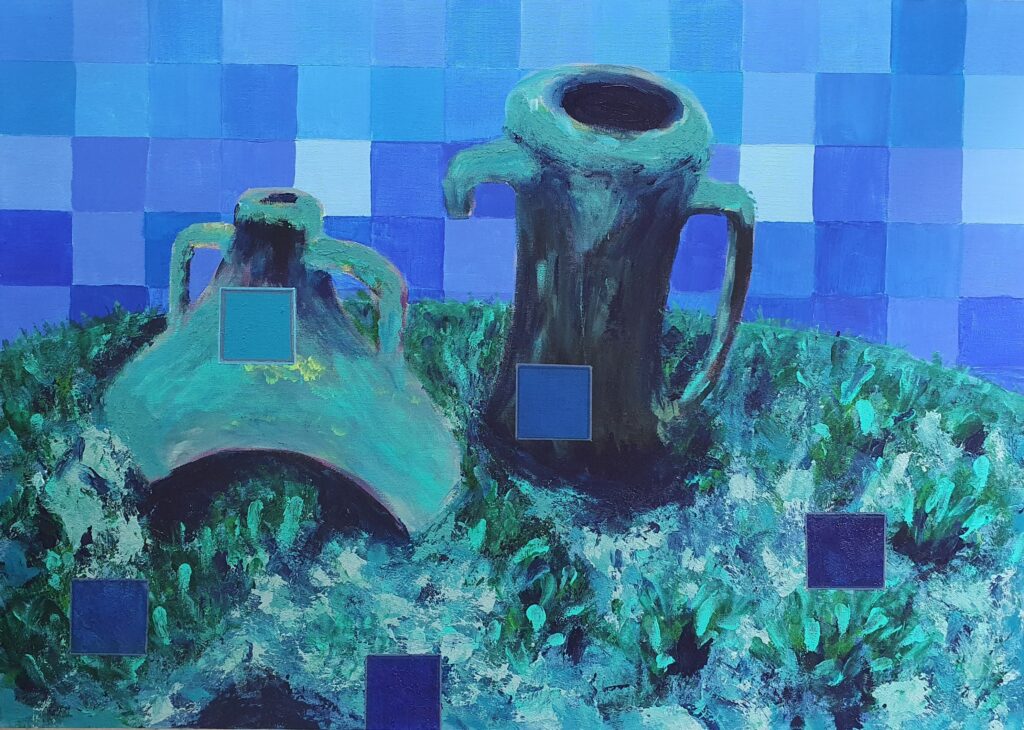
Pixels. They have become my signature; something my local community recognises immediately. But the interesting thing is that they arrived without intention. I have two degrees: fine arts and computer science, and somewhere along the way, those two worlds merged on the canvas. Pixels are how computers decompose complex images into their simplest parts. And that’s what I do as a painter too, I break something down, find its essence, and rebuild it with colour and texture. I only understood this connection when I stopped and really thought about it. It wasn’t a concept I designed. It revealed itself.
What do you want your work to leave behind, in the viewer, in the world?
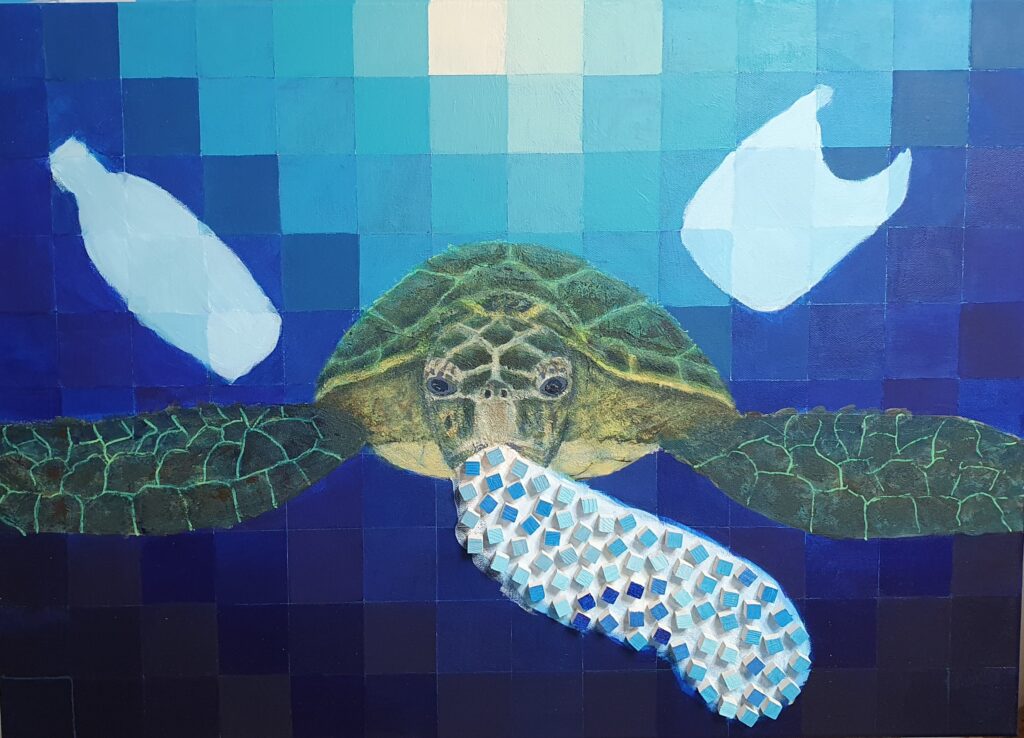
Joy, mostly. A sense of connection to nature, and a moment of quiet. Most of my work lives in that territory: warmth, beauty, the kind of peace you feel when you’re truly present in the natural world. But I also have pieces that ask harder questions. Works like “I Thought It Was a Jellyfish” and “I Dream of a Better World” come from a different place. They are invitations to think critically, to reconsider how we treat the planet we share with every other living thing. Joy and activism aren’t opposites for me. They come from the same love.
What’s the hardest thing about being an artist?
Exposure. Showing your work to the world and standing behind it. Every painting I make carries something of me: my eye, my emotion, my way of seeing. It is, in a sense, an autobiographical signature. So when someone says they don’t like a piece, it doesn’t feel like art criticism. It feels personal. I struggled with that for a long time. But I’ve made my peace with it. Not everyone will connect with your work, and that’s not a failure. It means your work has a specific voice. And a specific voice will always find its people.
What would you tell a younger version of yourself who was just starting out?
Start now. Don’t wait for better circumstances. They rarely come on their own. As a child, I dreamed of enrolling in art school. My family was against it; they believed you couldn’t make a living from art. So I enrolled in economics instead, a path I never truly walked and never loved. And for years, I didn’t paint. Not because I didn’t want to, but as a quiet internal revolt against a choice that was never really mine. I carried that bitterness for a long time. I graduated in painting at 49. And while I have no regrets about who I’ve become, I wish I had told that younger girl sooner: the life that fits you is worth fighting for. Start before you’re ready. Start before anyone gives you permission!
Explore Tamara’s work at tamaraperusic.com
Follow her on Instagram @tamara.perusic.art